Nairobi, Kenya — June 17, 2025
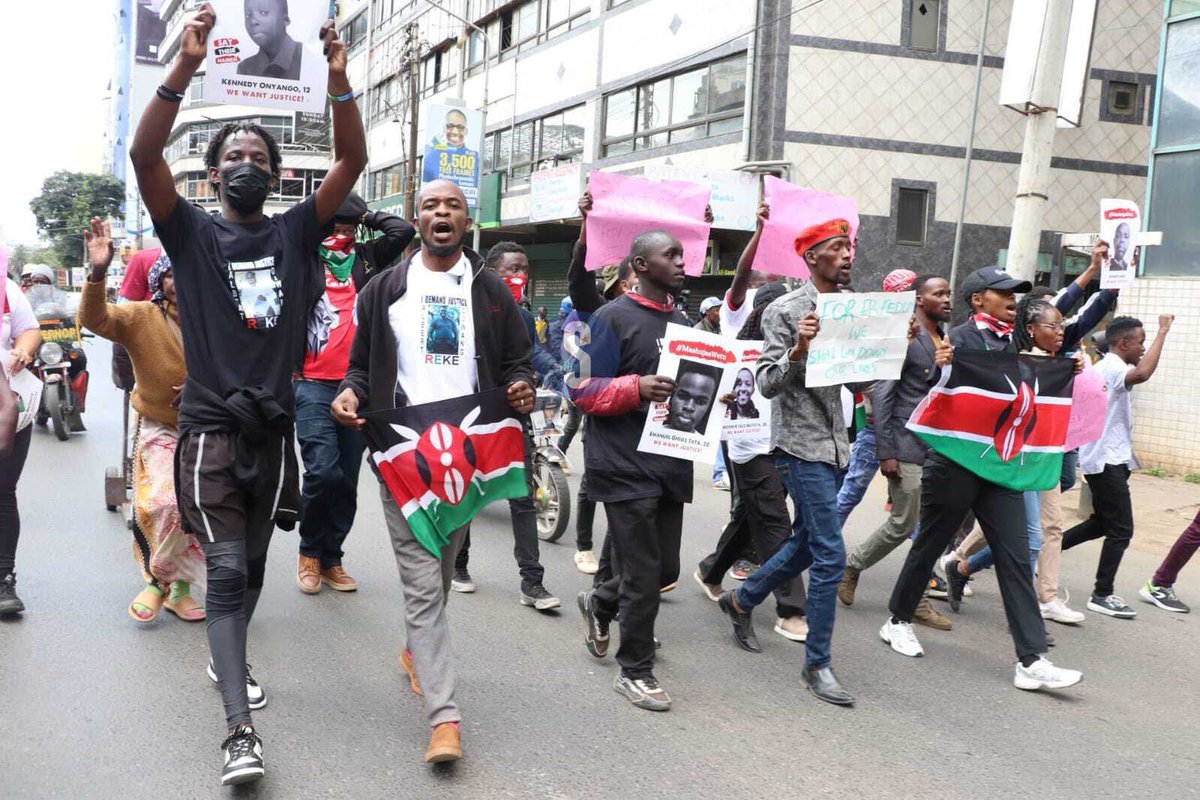
A peaceful protest turned deadly on Tuesday when police shot and killed an unarmed face mask vendor outside Imenti House on Tom Mboya Street in Nairobi, amid growing nationwide demonstrations demanding justice for the late blogger Albert Ojwang. Two motorcycles were also torched after suspected hired goons attacked protesters.
The vendor, whose name has not been officially released, was reportedly not participating in the protest but was caught in the chaos while conducting his business near the demonstration zone. Eyewitnesses say he was shot in the head by police officers attempting to disperse protesters using live ammunition, tear gas, and water cannons.
Tensions Boil Over
The demonstrations tagged online as #JusticeForOjwang—have erupted across major cities in Kenya following the suspicious death of Albert Ojwang, a 31-year-old blogger and teacher, while in police custody on June 8. Ojwang had been arrested for allegedly defaming Deputy Inspector General Eliud Lagat.
While police claimed Ojwang committed suicide by hitting his head on a wall, a second autopsy commissioned by his family revealed multiple signs of blunt force trauma and strangulation, pointing to possible torture and homicide.
Mob Attacks and Motorbike Torching
Violence escalated near Imenti House when a group of unidentified hooded men on motorcycles reportedly charged at protesters, wielding clubs and stones. Protesters, suspecting the riders were hired to disrupt the demonstration, retaliated by burning two motorbikes on the scene.
Human rights groups have condemned both the police’s use of deadly force and the apparent deployment of vigilante attackers to intimidate protesters.
Calls for Justice
Protests have since spread in Nairobi, with demonstrators demanding:
- Immediate prosecution of officers involved in Ojwang’s death
- Full accountability for the shooting of the unarmed vendor
- Structural reforms in the Kenya Police Service
- Legal protection for bloggers, whistleblowers, and online critics
Crowds carried banners reading “Stop Killing Us,” “Justice for All,” and “Police Are Not Above the Law.” Civil society organizations, including Amnesty International Kenya and the Law Society of Kenya, have vowed to escalate pressure if justice is delayed.
The Bigger Picture
Ojwang’s death and the killing of the unarmed vendor are being seen as symbols of systemic abuse, drawing comparisons to last year’s protests against tax hikes and state violence. Many Kenyans now view the police force as a tool of political repression rather than public safety.
“We are witnessing the criminalization of dissent in real time,” said a representative from the Kenya Human Rights Commission. “This is not just about one man—this is about a pattern of impunity that must end.”
About the Author