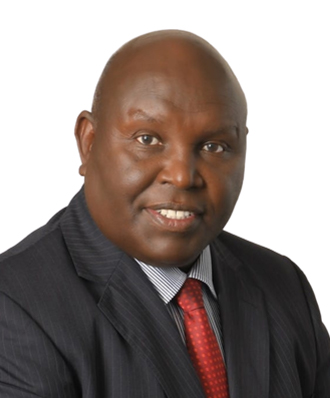
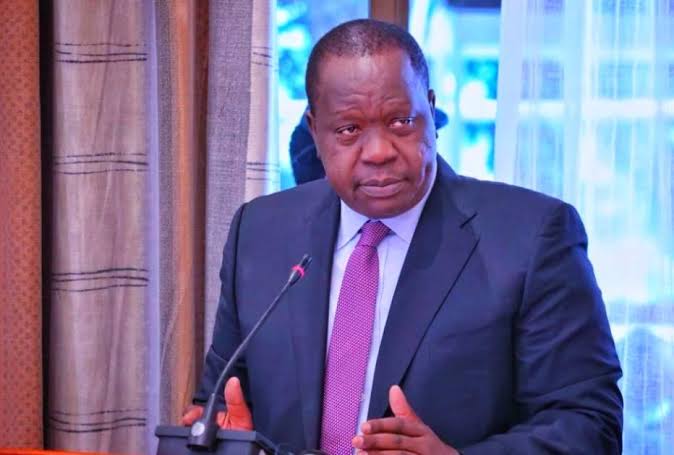
Nairobi, Kenya — June 20, 2025 — After months of speculation, political silence, and a brief stint overseas, former Interior Cabinet Secretary Dr. Fred Matiang’i is back on Kenyan soil—this time with a clear mission: to contest the 2027 presidential election.
Landing at Jomo Kenyatta International Airport on the evening of Wednesday, June 19, Matiang’i was welcomed not as a private citizen, but as a political heavyweight returning to claim his place on Kenya’s turbulent electoral stage. Jubilant crowds, chanting “Ruto Must Go!” and waving Jubilee Party flags, gathered to greet him, signaling a potent mix of nostalgia, expectation, and the beginnings of a campaign that could redefine the country’s political balance.
A Strategic Exit and a Calculated Return
Matiang’i’s time abroad was not exile—it was strategy. Following the transition of power in 2022, he took up a senior role with an international development agency in Washington, D.C., keeping a low profile but closely observing the evolving Kenyan political terrain. His resignation from that post this month was carefully timed, paving the way for a full-time return to domestic politics.
Insiders close to Matiang’i suggest the decision was not abrupt. “He has been planning this for months,” said a senior Jubilee operative. “This return is not symbolic. It’s the start of his path to State House.”
Endorsement from Jubilee Party
The Jubilee Party, which once dominated Kenya’s political landscape under President Uhuru Kenyatta, has thrown its weight behind Matiang’i. Party Secretary-General Jeremiah Kioni confirmed that Matiang’i had been cleared to lead the party into the 2027 elections.
“We are not apologizing for standing with Dr. Matiang’i,” said Kioni at the airport. “Even if they try to arrest him or frustrate him, we will choose him as our candidate. Kenya needs leadership that is not noisy but delivers.”
This endorsement positions Matiang’i as Jubilee’s torchbearer at a time when the party is eager to reassert itself after suffering heavy losses in the 2022 general election.
A Technocrat’s Rise in a Politician’s Arena
Matiang’i is no stranger to high-stakes leadership. He earned a reputation as a no-nonsense technocrat under President Uhuru Kenyatta, holding multiple portfolios including Education and Interior. As Education Cabinet Secretary, he gained praise for curbing exam cheating and restoring integrity to the national examination system. As Interior CS, he was often regarded as the government’s most effective and feared enforcer, earning both respect and criticism for his tough stance on law and order.
For many Kenyans, these traits translate into presidential potential—especially at a time when issues of corruption, governance, and public sector discipline dominate the national discourse.
Political Dynamics: Rivals and Possibilities
Matiang’i’s re-entry reshuffles the deck ahead of the 2027 contest. While President William Ruto is expected to seek a second term, Matiang’i could emerge as his strongest challenger especially if he manages to unite opposition elements within Jubilee and beyond.
The role of Raila Odinga, another perennial contender, also looms large. If Odinga decides to make another run, the opposition vote could split unless there is a consensus or coalition. However, some analysts suggest Matiang’i may appeal to a different segment of the electorate: urban professionals, civil servants, and younger voters fatigued by traditional ethnic-based politics.
Political analyst Grace Mwakio noted, “Matiang’i represents a different kind of candidate stern, policy-driven, and efficient. He’s not a populist, but he has credibility. And credibility might just be what Kenyans are ready for.”
Challenges Ahead
Despite the momentum, Matiang’i’s path is not without obstacles:
- Legal scrutiny: He has faced inquiries into actions taken during his time in office, including controversial security crackdowns.
- Regional alliances: Building grassroots networks, particularly in regions like Rift Valley and Mt. Kenya, will be critical.
- Coalition-building: Winning the presidency in Kenya often requires forming a broad, ethnically diverse coalition—something he has not yet achieved.
Looking Forward
In the coming weeks, Matiang’i is expected to kick off a countrywide listening tour, engage with youth groups and clergy, and begin assembling a formal campaign team. Early indications suggest that his platform will focus on governance reforms, anti-corruption, education, and public service efficiency.
Whether he will succeed in transforming from a trusted technocrat into a nationally electable leader remains to be seen. But one thing is clear: Fred Matiang’i’s return has reignited Kenya’s political engines and the 2027 race is officially on.
About the Author